
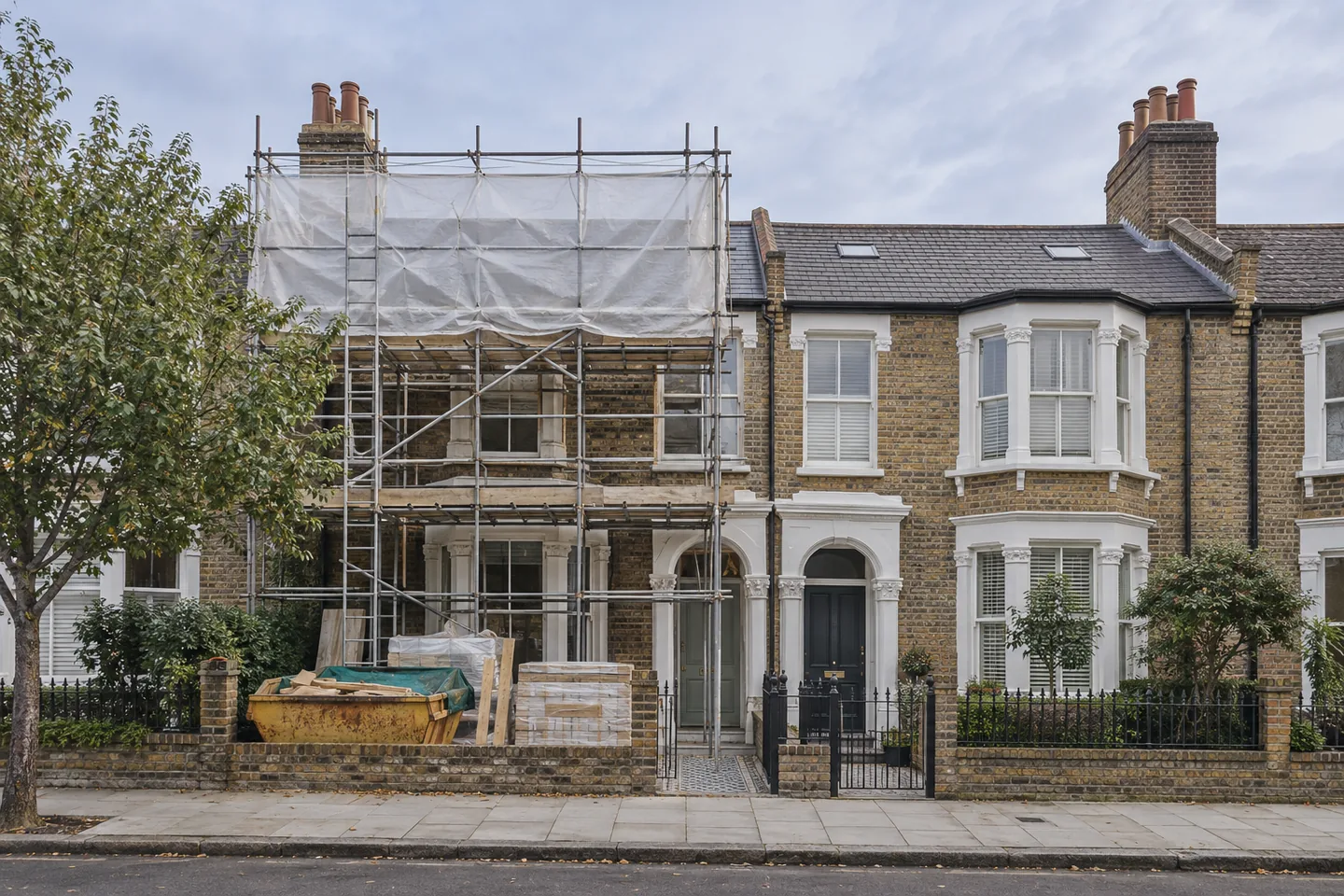
What the Party Wall Act covers
The Party Wall etc. Act 1996 applies to work on a party wall, work to a party structure such as a floor between flats, and certain excavations near a neighbour's foundations. It is separate from planning permission and building regulations, and it exists to allow work to happen while protecting the neighbour's property.
Typical triggers include loft conversions, extensions, basement digs, cutting pockets for steelwork, chimney breast removal, and injecting a damp-proof course. If your work touches a shared wall or structure, or excavates near it, the Act is probably in play.
The two common triggers
The first is work directly to a shared wall or structure, including cutting into it for a beam, a new opening or a flue. The second is excavation within 3 metres of a neighbour's structure at a depth greater than its foundations, or within 6 metres on certain lines. Both are common on extensions and basement projects.
Even if you think the Act does not apply, check before work starts. The rules are similar across the UK but not identical, so confirm what applies in your jurisdiction. Getting this wrong can turn a two-week project into a legal argument.
Notices: what to send and when
Notices are written and usually served at least two months before work to a party wall, and one month before excavation works. Keep proof of delivery and a copy of the notice with the drawings. The notice should describe the intended work clearly enough for a neighbour to understand what is happening to the shared structure.
Ignoring a notice does not stop the process. It simply moves things to the dispute route, which is slower and more expensive for everyone. A short, clear letter, sent early, is the cheapest part of the whole procedure.
If your neighbour agrees, dissents or stays silent
If they consent in writing, the matter can proceed on that basis. If they do not respond or dissent, the surveyor route follows: either an agreed surveyor, or one surveyor for each side plus a third. The surveyor prepares an award that records the works, the conditions and any security for costs.
- Both sides usually bear their own professional fees unless the award says otherwise.
- The award can set working hours, access arrangements and protection measures.
- The award is a legal document, not advice; read it before work starts.
- Keep it with the building control file and the drawings.
Awards, schedules of condition and protection
A schedule of condition records the neighbour's property before work begins, so that any damage can be assessed fairly later. Photographs, dated notes and a walk-through are quick and cheap, and they protect both households. If the neighbour's side is not inspected, a crack that appears later becomes a difficult conversation.
An award may also require protection measures, such as sheeting, monitoring or a specific method of working. These conditions are there to keep the work reasonable, not to obstruct it, and they are easier to follow than to renegotiate.
Who pays
The person carrying out the work normally pays for the work itself and for reasonable professional fees arising from it. The Act allows for some costs to be recovered where work benefits the neighbour, but in most owner-occupier projects the building owner carries the cost. Agree cost responsibility in writing early, even when the relationship is good.
Tell your buildings insurer about the works, and ask about non-negligence cover on larger projects. Check whether the contractor's insurance includes damage to adjoining property, because not all policies do.
Keeping it neighbourly
Talk before the notice arrives. Share drawings, a programme and a contact for questions, and keep noise, dust and access considerate. Stick to the working hours you agreed, and tidy the shared areas at the end of each day.
Document everything, including the small things. A brief written record of access, condition and progress keeps issues from growing into disputes, and it also helps if the work is inspected or sold later. The Act is administrative; the relationship is what makes it work in practice.

Frequently asked questions
Does the Party Wall Act apply to a loft conversion?
Often yes. If the work involves a party wall or a shared structure, or excavation near a neighbour's foundations, notices are likely to be needed. Check with the party wall process for your jurisdiction before work starts.
What happens if I do not serve a party wall notice?
You may be in breach of the Act, and a neighbour can seek an injunction or damages. The dispute process also becomes more expensive and slower than serving notice properly at the start.
How much does the party wall process cost?
Costs depend on the works and whether surveyors are appointed. A consenting neighbour usually costs less than a contested award, which is one more reason to talk early.
Party wall procedure is mostly administrative and mostly avoidable stress. Serve the notice early, document the condition of the neighbour's property, and keep the conversation about the works rather than the people.
This article is general guidance for UK homeowners, not legal advice. Rules differ across England, Wales, Scotland and Northern Ireland; take professional advice for your project.