
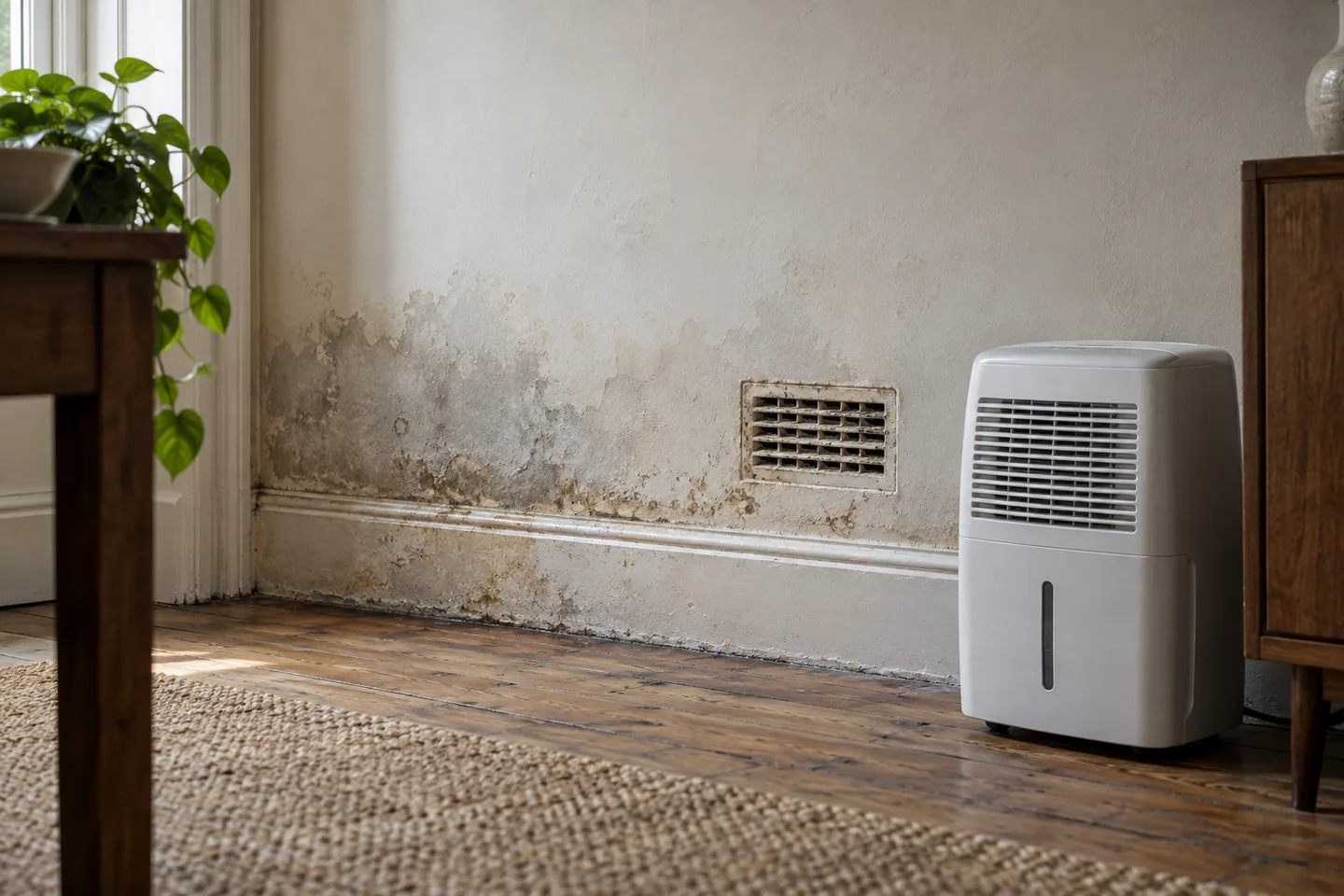
Start with the pattern, not the product
Damp is a symptom, and the treatment depends entirely on the cause. Before buying anything, note where the damp appears, when it appears and whether it is worse after rain or after the house has been used for cooking, showering and drying laundry. Photograph the same spot over a week: a patch that grows after rain tells a very different story from one that grows on a cold morning.
Check the outside of the building first. Gutters, downpipes, roof coverings, flashing, render, pointing, plinth heights and ground levels account for a large share of damp complaints. Water that gets into a wall and cannot get out will find a way to show itself inside, usually in the least convenient place.
Condensation: the most common cause
Condensation appears as mould on cold surfaces: window reveals, external wall corners, the back of wardrobes attached to outside walls, and behind furniture. It is a ventilation and temperature problem, and it is by far the most common form of damp in modern living conditions.
- Extract moisture at source with kitchen and bathroom fans ducted outside.
- Keep trickle vents open and undercuts clear so air can move between rooms.
- Dry laundry outdoors or in a ventilated, heated space, not on radiators in a closed room.
- Keep some background heat in winter so surfaces stay above the dew point.
Insulation and heating reduce cold surfaces, but only if ventilation is maintained. Sealing a house without planning air changes simply moves the condensation to the next cold spot.
Penetrating damp: water getting in
Penetrating damp usually follows the weather. It appears on walls, around windows, below roofs and around chimneys after rain, and it often leaves a tide mark. Common causes include blocked or broken gutters, failed pointing, cracked render, damaged flashing, blocked hoppers and high ground levels bridging the damp-proof course.
Repairs are usually straightforward once the entry point is found, and that is the hard part. A damp patch that moves or grows with the weather is a strong clue. A patch that appears steadily regardless of the weather suggests a plumbing leak instead.
Rising damp: rarer than the label suggests
True rising damp relates to the base of a wall, the original damp-proof course and the ground level outside. Older damp-proof courses were often slate, tile or bitumen, and they can be bridged by a raised path, a solid floor, or a cement render that reaches below the internal floor level.
Injected courses and membranes have their place, but they are not a fix for every damp patch. The label is often applied quickly by people selling the treatment. Get an independent survey first, and remove the bridging before paying for a chemical solution.
Trapped and bridging damp in older walls
Older walls manage moisture by breathing. Cement renders, vinyl paints and impermeable modern repairs can trap that moisture, especially on solid walls. Breathable finishes and careful detailing usually suit the original construction better, even if they are not marketed as a quick fix.
Bridging happens when external ground levels, internal floors or renders leave water nowhere else to go. Lowering the ground level, improving drainage and detailing the plinth correctly may solve a problem that a chemical injection would only mask. The cause is always cheaper to fix than the symptom.
Ventilation and heating: the underrated half of the fix
Houses need air changes, and older houses are not sealed the way modern ones are. If you improve airtightness, plan the ventilation at the same time. Trickle vents, extract fans, window use and mechanical ventilation all have a role, and the right mix depends on how the house is built and used.
Keep the background heating on in winter, leave gaps behind furniture on external walls, and never block air bricks or subfloor vents. These are small habits, but they change how a house behaves through a wet winter.
What to do before you spend money
Fix water sources first: gutters, drainage, plumbing, roof, render and ground levels. Improve ventilation and reduce moisture production. If the cause is still unclear, pay an independent surveyor who does not sell treatments, and act on their findings.
Record the work and review the same spots after a wet season. If the damp has not returned, you have fixed it rather than covered it. If it has, you have new information, and the next step should follow the evidence rather than a product.

Frequently asked questions
How do I know if I have rising damp?
True rising damp is less common than the name suggests and usually shows at the base of a wall with a failed or bridged damp-proof course. Check external ground levels and renders first, and get an independent survey before paying for a treatment.
Will a dehumidifier fix damp?
A dehumidifier can control condensation temporarily, but it does not fix water entering the building or a bridged damp-proof course. Use it as a short-term measure while you find and repair the cause.
Is mould always caused by damp?
Mould needs moisture. That can come from a leak, a cold bridge, high humidity or poor ventilation. Cleaning it without changing the conditions usually means it returns.
Damp is a detective story, and the cheapest part is the investigation. Find the water path, fix it, ventilate the house deliberately, then repair the finishes.
This guide is general information, not a survey. For persistent or structural damp, use an independent chartered surveyor or specialist who does not sell the treatment.