
Name the noise before you buy anything
Airborne noise is speech, music and televisions; impact noise is footsteps, doors and dropped objects. The two behave differently and need different treatment. Note when and where the noise happens, because a bedroom complaint and a living-room complaint can lead to completely different work.
Keep a short diary for a week. It makes the conversation with a neighbour or a contractor much easier, and it stops the argument from becoming about personality rather than sound.
How sound actually travels
Sound takes the easiest path available. The direct path runs straight through the shared wall or floor. Flanking paths run through joists, floorboards, ceiling voids, services, sockets and the roof space. Small gaps let a surprising amount of sound through, which is why airtightness is part of soundproofing.
Treating the whole assembly matters more than adding one expensive layer. If you add mass to a wall but leave a gap at the floor, the improvement will be disappointing. Find the paths before choosing products.
Party wall: the layered approach
- Add mass with dense boards or a second skin, not lightweight panels.
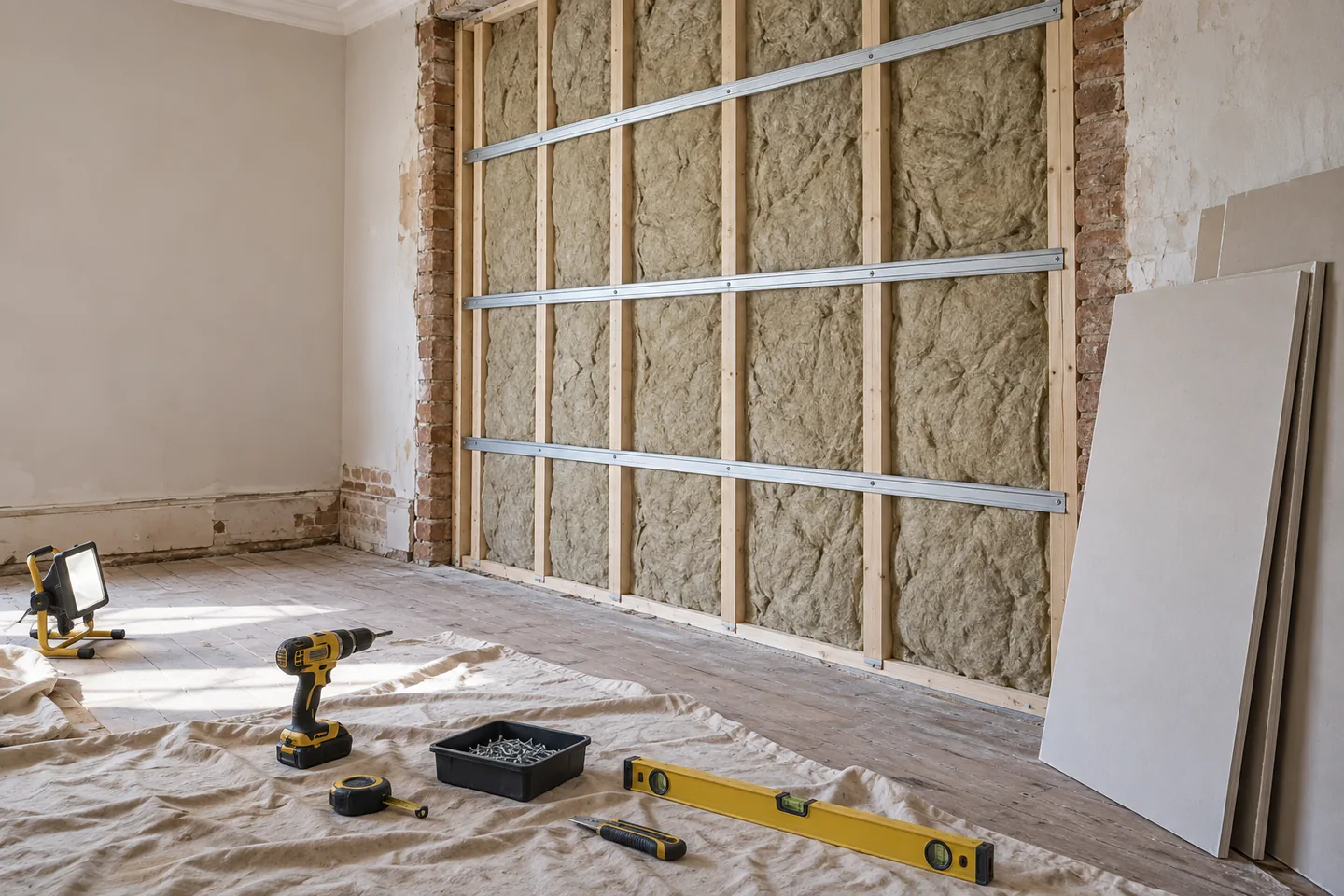
- Use resilient bars or a separate stud frame to break the mechanical connection.
- Fill the cavity with acoustic mineral wool to absorb energy inside the assembly.
- Seal every edge, socket and penetration; a small gap undoes a lot of work.
Building an independent stud wall in front of the shared wall is often the most effective single improvement, because it creates mass, isolation and an absorbent cavity at once. It costs floor space, so plan it as part of a room renovation rather than a last-minute addition.
Party floor and ceiling: impact noise
Impact noise travels through the structure, so it needs a resilient layer and a floating build-up: resilient underlay, acoustic flooring layers or a floating screed, plus a separate ceiling below where possible. Filling the joist void helps, and gaps around pipes and cables must be sealed.
Remember that you may not have access to your neighbour's side. One-sided treatments can deliver a real improvement, but the result depends on the existing construction and on the flanking paths. Ask a specialist what is realistic before promising yourself silence.
What building regulations say
Conversions and new work between dwellings are expected to meet sound insulation standards, and some projects need testing to demonstrate it. Redevelopment of existing flats and maisonettes can also trigger requirements. Asking building control early avoids designing twice and stops the work being signed off with conditions you cannot meet.
If the problem is ongoing behaviour rather than construction, there are separate routes through environmental health and the lease. Building work can improve sound insulation; it cannot change how a neighbour chooses to live.
Where the money is best spent
Seal the small gaps first: they are cheap and often make a noticeable difference. Then add mass and isolation together rather than doubling one of them. Fix the noisiest path, then check whether a flanking path has become the new limit.
Set realistic expectations. You can often reduce noise a lot without making a room silent, and the last few decibels are disproportionately expensive. Spend where the noise actually comes from, not where it is easiest to reach.
A practical sequence
Investigate with a builder or an acoustic specialist and ask what is achievable in your construction. Plan the work alongside any other renovation so the build-up is opened once. Photograph the layers and keep the product certificates for the record.
Review after a few weeks, once the room is furnished and the acoustics have settled. Soft furnishings, rugs and curtains absorb sound and change how the same noise level feels. Sometimes the cheapest improvement is the last one you think of.

Frequently asked questions
Does soundproofing a party wall actually work?
It usually reduces noise noticeably when mass, isolation and absorption are combined and gaps are sealed. It is less effective where flanking paths through floors and joists are left untreated.
Is acoustic insulation in the cavity enough on its own?
No. Mineral wool absorbs energy inside the assembly, but airborne sound still needs mass and a break in the mechanical connection between the two sides.
Can I soundproof a party floor from my side only?
Often you can improve it from one side with a resilient floating floor or a suspended ceiling, but results depend on the existing joists and flanking paths. Ask a specialist what is realistic before you build.
Soundproofing rewards careful detailing more than expensive products. Seal the gaps, add mass, break the connections, and be honest about the limit of what one side can achieve.
This article is general guidance, not acoustic design. For a serious noise problem, get advice from a specialist who can assess the specific construction.