
If you want to redesign my bedroom online before spending money, AI room visualisation is a practical first step. Uploading a photo of your current bedroom lets you compare layouts, wall colours, furniture styles and lighting ideas before you buy paint, wardrobes, a bed frame or soft furnishings. It will not replace measuring properly or checking product dimensions, but it can stop expensive guesswork early.
For UK homeowners and renters, the main benefit is confidence. A bedroom makeover can easily run into hundreds or thousands of pounds once you include furniture, decorating, curtains, storage and delivery fees. Testing the look online first helps you decide what is worth buying.
Key takeaways
- AI bedroom redesign tools are best used before you buy furniture, paint or decor, not after.
- Start with a clear photo of your real room so the suggestions respond to your space, light and layout.
- Use online redesigns to compare styles, colour palettes and furniture scale before committing money.
- Still measure everything: AI can suggest a look, but it cannot guarantee a wardrobe, bed or bedside table will physically fit.
- For best results, combine AI visuals with a simple budget, a shopping list and sample paint tests in your actual bedroom.
Why redesign your bedroom online before buying anything?
Bedrooms are deceptively easy to get wrong. They have to handle sleep, storage, dressing, laundry overflow, charging cables and sometimes work-from-home furniture. A new bed, chest of drawers or wall colour can change how the whole space feels.
The problem is that most purchases are made from tiny samples, shop displays or product photos that are not your bedroom. A paint colour that looks calm in a showroom can turn cold in a north-facing UK room. A king-size bed that feels luxurious online can leave no walking space in a terrace bedroom.
When you redesign a bedroom online first, you create a low-risk test. You can see whether a darker headboard works with your flooring, whether sage green walls feel restful, or whether fitted-looking storage is worth exploring before asking for a quote.
If you want a quick starting point, you can try the AI studio with a photo of your room and compare a few directions before building a shopping list.
What an AI bedroom redesign can help you decide
AI is most useful when you ask it to answer concrete design questions. Treat it as a visual testing tool. The more specific your decision, the more useful the result becomes.
1. Whether a style suits your actual room
You might like Japandi, hotel-style luxury, modern cottage, soft minimalism or a darker boutique look. The question is not whether the style is attractive in general. The question is whether it works with your ceiling height, window position, carpet, fitted wardrobes and natural light.
For example, many small UK bedrooms suit warm woods, low-contrast bedding and hidden storage better than heavy dark furniture. Our guide to Japandi bedroom ideas for small UK homes gives more specific ideas to test.
2. Whether a paint colour is worth sampling
Paint is cheaper than furniture, but repainting a bedroom still costs time, dust sheets, primer, brushes and often a lost weekend. AI can help you narrow the shortlist before you buy tester pots. You can compare warm white, mushroom, blush, deep blue, olive, greige or charcoal on the same room photo.
Do not skip real paint samples. Screens lie, and AI images are only approximations. But if the online version makes the room feel smaller, colder or too busy, that is a useful warning.
3. Whether furniture scale is likely to feel right
Bedroom furniture is where wasted spend becomes painful. Beds, wardrobes and drawers are expensive to return, especially if they arrive flat-packed, assembled or delivered by a two-person service. An AI redesign can show whether the room feels crowded with a tall wardrobe, whether matching bedside tables are realistic, or whether a storage bed would visually dominate the space.
Use the image as a scale prompt, then confirm with a tape measure. Mark the footprint of large furniture on the floor with masking tape. Check door swings, drawers, sockets, radiator clearance and the walking route around the bed.
4. Whether lighting and textiles need more attention
Many bedroom makeovers fail because all the budget goes into the bed and wall colour. The finished room still feels flat because the lighting, curtains, rugs, cushions and bedside lamps were treated as afterthoughts. A good online redesign can show how much difference warmer lamps, layered bedding or full-height curtains might make.
This is especially useful in rented homes where you may not want to change flooring or fitted storage. Sometimes the biggest improvement comes from better lamps, a warmer palette, new bedding and neater storage.
Before and after: using a real bedroom photo as the starting point
The most useful online redesigns start with the actual room, not a generic mood board. A real photo forces the ideas to respond to awkward corners, window placement, existing flooring and the amount of daylight the room gets.
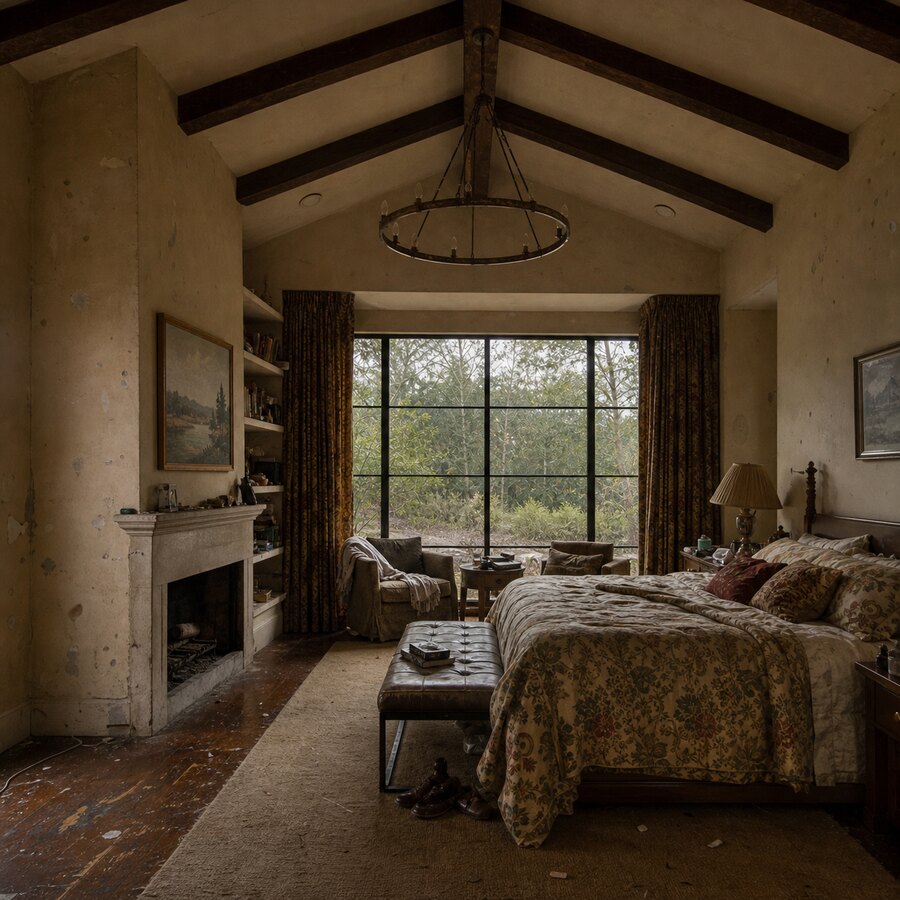
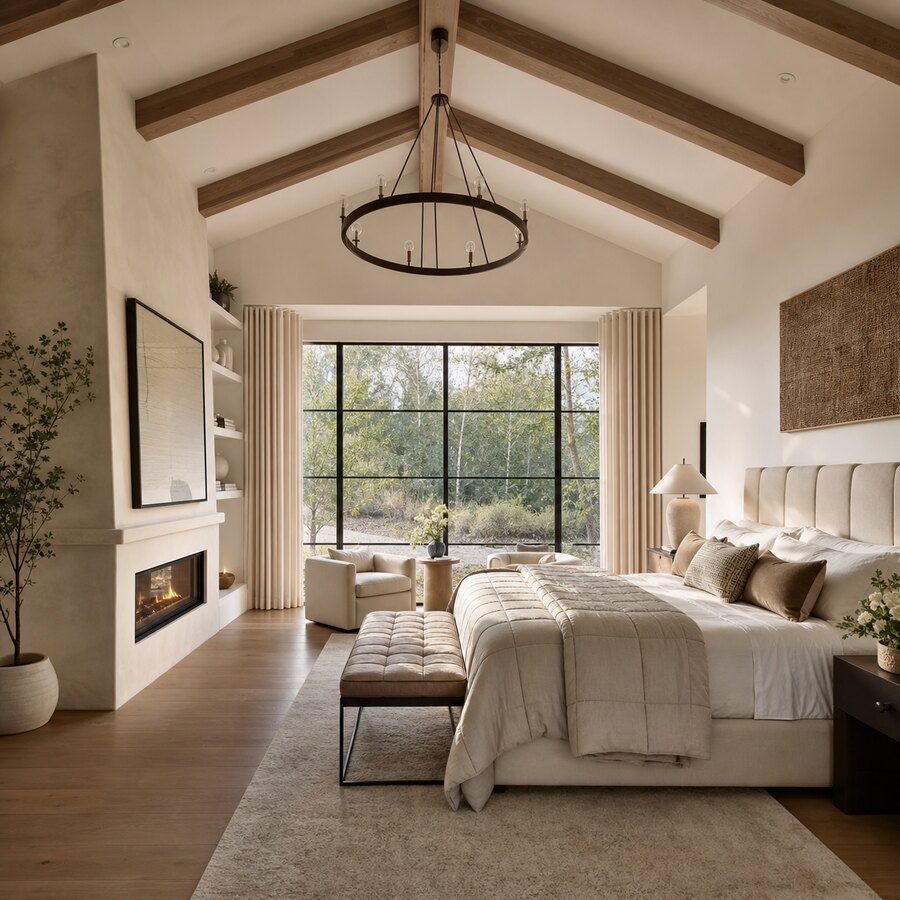
You can see more room examples on the before and after gallery. Use them as direction, not as a promise that every room should copy the same look.
How to redesign my bedroom online without wasting time
A little preparation makes the result far more useful. If you upload a dark, cluttered or angled photo, the output may look impressive but be hard to act on. Treat the process like a design test, not entertainment.
Step 1: Photograph the room clearly
Take the photo in daylight if possible. Stand in a corner or doorway so the tool can see the bed, walls, windows and main furniture. Open curtains, switch off harsh coloured lighting and tidy enough that the room shape is visible.
Step 2: Decide what must stay
List anything you are not replacing: flooring, fitted wardrobes, bed size, curtains, radiator position, built-in shelving or a desk. This stops you falling in love with a design that assumes you are changing more than you actually can.
Step 3: Test three sensible directions
For purchase-intent decisions, three options are usually enough. Try one safe direction, one warmer or bolder direction, and one more premium direction. Too many versions can make you less decisive.
Step 4: Build a budget from the chosen direction
Once one version feels right, translate it into a shopping list. Split it into essentials and nice-to-haves. Essentials might include paint, bed frame, mattress, wardrobe, bedside lights or blackout curtains. Nice-to-haves might include wall art, cushions, a bench, a rug or upgraded handles.
Use UK prices and delivery realities. A modest bedroom refresh might be under £500 if you keep the bed and focus on paint, lighting and textiles. A fuller makeover with a new bed, mattress, wardrobes and decorator labour can easily move past £2,000.
What AI cannot decide for you
AI bedroom tools are useful, but they are not a substitute for practical checks. They may invent furniture, show unrealistic proportions or make a small room look more spacious than it is. Before purchasing, check product measurements, delivery access, returns terms, paint samples and electrical safety. If you are renting, check the tenancy agreement before painting or drilling.
For bigger decisions, it can also help to understand the difference between online AI support and professional design advice. We compare the options in AI vs interior designer: what should UK homeowners use first?.
Bedroom purchases worth testing online first
Some purchases deserve more testing because they affect layout, budget or comfort.
- Bed frames: test height, colour, headboard shape and whether the frame overwhelms the room.
- Wardrobes: compare freestanding, fitted-look and mirrored options before requesting quotes.
- Paint colours: narrow the shortlist online, then use real samples on different walls.
- Curtains and blinds: test full-height curtains, Roman blinds or blackout options before buying.
- Rugs and lighting: check whether they warm the room or make it feel visually crowded.
A simple buying workflow after the AI redesign
Once you have a bedroom design you like, slow down before ordering everything. A practical sequence can prevent most expensive mistakes.
First, measure the room and all existing furniture you are keeping. Second, choose the wall colour family and order samples. Third, decide the largest purchase, usually the bed or wardrobe, because it controls the rest of the layout. Finally, buy decor once the main pieces are in place.
When is it worth paying for professional help?
If your bedroom only needs a visual refresh, AI may be enough to choose a direction and avoid waste. If the room involves damp, electrical changes, bespoke joinery or a difficult layout, professional help may save money. A sensible middle ground is to use AI first, then take your preferred direction to a decorator, joiner, retailer or designer.
Soft CTA: test the look before you spend
Before ordering furniture or committing to paint, upload your bedroom photo and test a few realistic directions in the AI studio. Use the result to shortlist colours, furniture shapes and lighting ideas, then confirm details with measurements and samples.
FAQ
Can I redesign my bedroom online for free?
Some tools offer limited free previews, while others charge for higher-quality renders or extra styles. Free options can be useful for early ideas, but if you are making real buying decisions, prioritise clear outputs, privacy, realistic style control and the ability to use your own room photo.
Is AI accurate enough to choose bedroom furniture?
AI is useful for judging style, colour and visual balance, but it is not accurate enough on its own for furniture dimensions. Use it to decide what kind of furniture to consider, then check measurements, delivery access, assembly requirements and return policies before buying.
What photo should I upload for a bedroom redesign?
Use a bright, clear photo that shows as much of the room as possible. A corner or doorway angle usually works well. Include the bed, window, main walls and storage so the redesign can respond to the real layout.
Should I test paint colours online before buying samples?
Yes, online testing is a good way to narrow your shortlist, especially if you are comparing several colour families. Still buy physical tester pots before painting because real colour changes with daylight, bulb temperature, wall texture and surrounding furniture.
Can AI help with small UK bedrooms?
Yes, small bedrooms are one of the best use cases because scale mistakes are costly. AI can help compare lighter palettes, storage beds, wall-mounted lighting, mirrored wardrobes and simpler furniture before you spend money.
Will an online bedroom redesign replace an interior designer?
Not always. It can replace some early mood-board and style exploration, but a designer is still valuable for complex layouts, bespoke joinery, sourcing, project management and detailed specifications.