
Before and after dining room renovations are useful because they show how much layout, colour and lighting can change the same room without needing a full rebuild. The best transformations usually solve one practical problem first, such as awkward circulation, poor evening light or a dining table that feels too large for the space, then use finishes to make the result feel intentional.
If you are planning a dining room update in the UK, start by comparing what the room does badly now with how you want it to behave on an ordinary weekday and when guests come round. The ideas below will help you read before-and-after examples more critically, borrow the right details, and test a direction before committing budget.
Key takeaways
- Good dining room renovations usually begin with layout, not paint colour.
- A round or oval table can improve flow in tight terraces, semis and kitchen-diners.
- Colour works best when it responds to natural light, flooring and adjacent rooms.
- Layered lighting makes a bigger difference than one bright central pendant.
- Before-and-after images are most useful when you look for the specific problem each change solved.
- Testing ideas visually first can reduce expensive second-guessing once trades are booked.
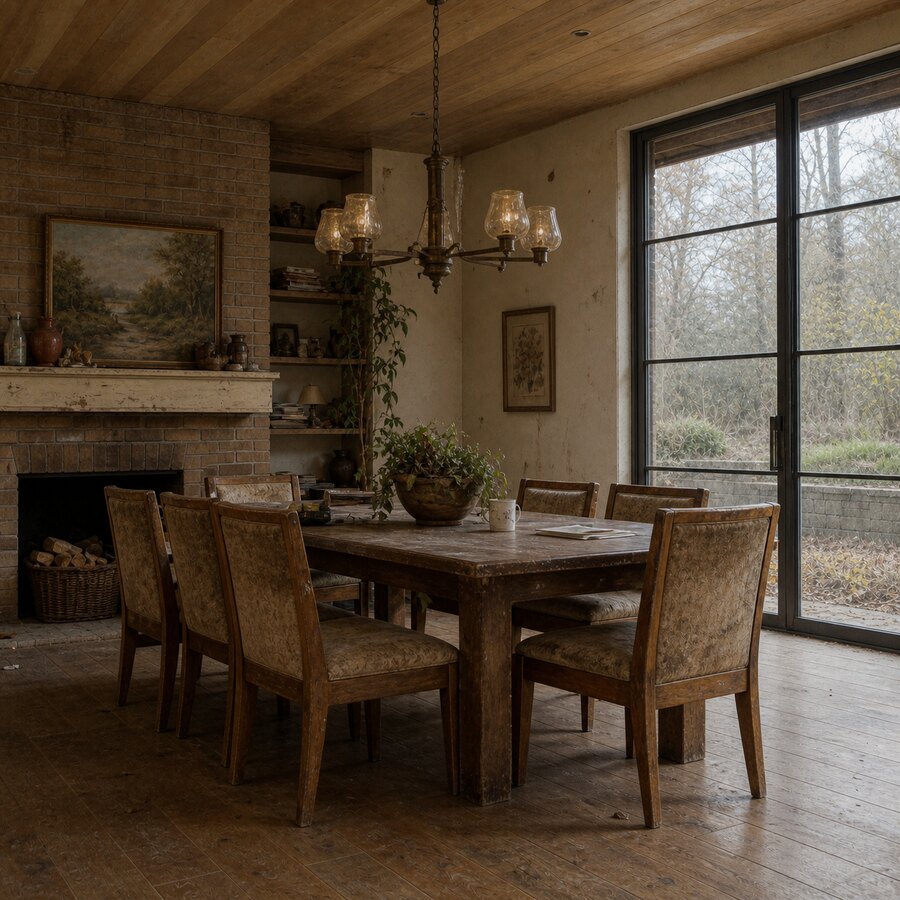
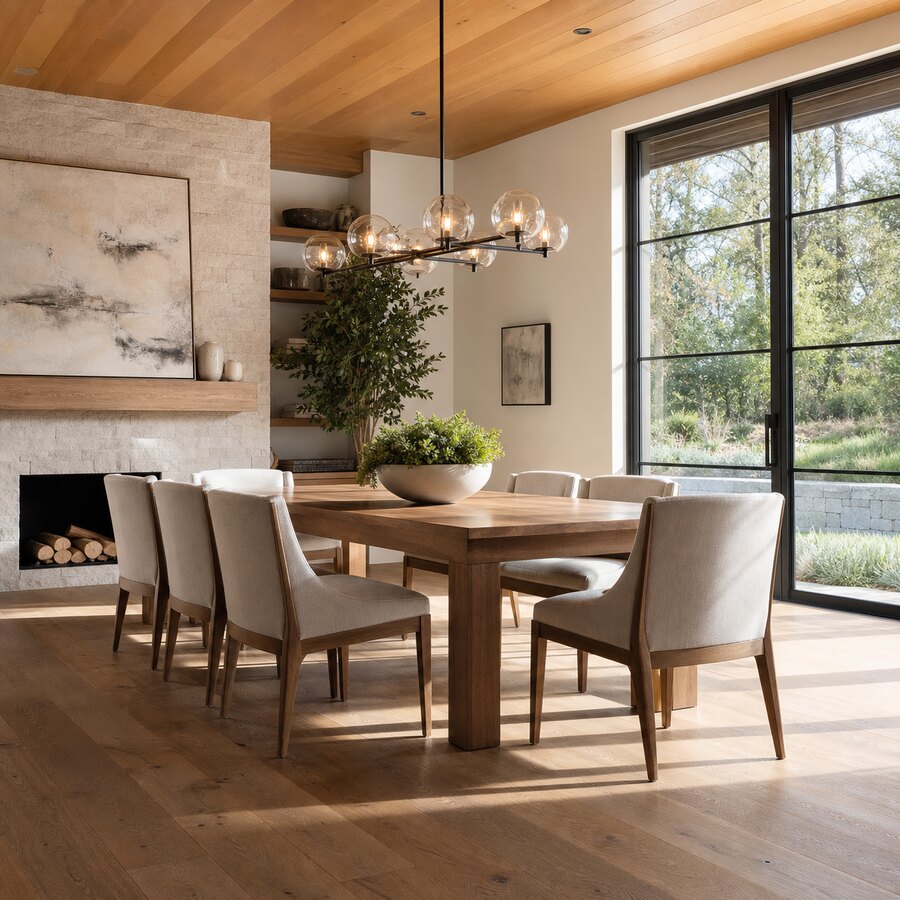
How to read before and after dining room renovations
It is easy to look at a finished dining room and focus on the attractive parts: the pendant, the chairs, the wall colour, the styled table. A more useful approach is to ask what the original room was struggling with. Was the table blocking a doorway? Did the room feel cold in the evening? Was there too much contrast between the dining area and the kitchen or living room?
Once you identify the problem, the after photo becomes more instructive. A new colour scheme may look like a style decision, but it might actually be correcting poor daylight. A built-in bench may look decorative, but it may be the reason a family can seat six people in a narrow room. A large rug may be softening acoustics as much as adding pattern.
For more visual context, browse the before and after gallery and compare rooms by problem type rather than by trend. If a space has the same footprint, window position or awkward corner as yours, it is more useful than a spectacular room with completely different proportions.
Start with the dining room layout
Layout has the largest effect on whether a dining room feels comfortable. Before you change colours or buy a new light, check the practical distances around the table. In most homes, people need enough room to pull out chairs, pass behind seated guests and move between the dining area and kitchen without squeezing sideways.
As a rough guide, allow about 90 cm between the table edge and a wall or cabinet where people need to walk. If the chair only needs to pull out and nobody passes behind it, you may manage with a little less. In compact UK homes, every centimetre matters, so this is where table shape becomes important.
Rectangular tables for long rooms
A rectangular table suits many Victorian terraces, Edwardian semis and longer open-plan spaces because it follows the direction of the room. The after version usually looks calmer when the table is centred on a pendant or aligned with a feature such as a fireplace, bay window or kitchen island.
If the room is narrow, consider slimmer dining chairs, a bench on one side or a table with rounded corners. These small changes can make the layout feel less defensive and help the room work for daily meals rather than only occasional hosting.
Round and oval tables for better flow
Round and oval tables often create the most dramatic before-and-after improvement in tight dining rooms. They remove sharp corners from circulation routes and make conversation easier. An oval table can be especially useful when you want the softness of a round table but still need to seat six people.
This is a good idea for kitchen-diners where the dining area sits between a run of cabinets and a garden door. In the before image, the space may look cluttered or interrupted. In the after image, the same footprint can feel more generous simply because movement around the table has improved.
Use colour to change the mood, not just the walls
Colour is often the first thing people notice in before and after dining room renovations, but the best schemes are rarely random. Dining rooms are used at different times of day, and many UK dining spaces get limited direct sunlight, especially in winter. A colour that looks elegant in a bright south-facing room can feel heavy in a north-facing one.
For a small or shaded dining room, warm off-white, muted plaster, soft olive, mushroom, clay or gentle blue-green can feel more forgiving than a stark white. These colours add atmosphere without making the room feel smaller. If the room has good natural light, deeper tones such as inky blue, warm charcoal, oxblood or forest green can create a more intimate evening setting.
Connect the dining room to adjacent spaces
Many UK dining rooms are not fully separate rooms. They sit beside a kitchen, living room or hallway, so the colour needs to make sense from more than one viewpoint. Before choosing paint, stand in each doorway and check what you see in the same frame: flooring, cabinets, sofas, splashbacks and timber tones all affect whether the dining colour works.
If the adjoining room is busy, a quieter dining colour may help. If the adjoining room is plain, the dining area can carry more character through a bolder wall, wallpaper panel or painted ceiling. For broader inspiration, the post on small UK home glow-ups is useful because it shows how modest changes can still shift the feeling of a room.
Plan lighting in layers
Lighting is where many dining rooms underperform. A single central ceiling light may technically illuminate the room, but it rarely creates the atmosphere people expect from a finished renovation. The after image looks better when lighting is layered: task light for eating, ambient light for the room and accent light for depth.
Place the pendant over the table
A pendant should relate to the table rather than simply to the centre of the ceiling. If the table is slightly off-centre because of a doorway, fireplace or kitchen route, the pendant may need to move too. This one decision can make the after photo feel properly designed.
As a practical starting point, hang the pendant low enough to define the table but high enough that people can see across it comfortably. Dimmable bulbs are strongly recommended. Dining rooms need brightness for homework, admin and cleaning, but lower, warmer light for meals.
Add wall lights, lamps or picture lighting
Wall lights can make a dining room feel finished without taking up floor space. They are particularly useful in period homes where a fireplace, alcove or sideboard creates a natural focal point. If hardwiring is too expensive, a table lamp on a sideboard or a plug-in wall light can still soften the room.
Accent lighting also helps in open-plan rooms. A lamp near the dining area can separate it from the kitchen once the cooking lights are off. This is one reason after photos often feel calmer: the lighting tells the eye where the dining zone begins and ends.
Budget: where to spend and where to save
A dining room update can be relatively modest compared with a kitchen or bathroom renovation, but costs still vary. Paint, lighting, second-hand furniture and styling may refresh a room for a few hundred pounds. Electrical changes, fitted seating, flooring and plastering can move the project into the low thousands.
Spend where the decision affects daily use: lighting positions, table size, chair comfort, flooring repairs and joinery dimensions. Save on items that are easy to change later, such as artwork, vases, loose cushions and some decorative accessories. If you are comparing renovation priorities across rooms, the guide to bathroom renovation cost in the UK is a useful reminder of how quickly fixed services can change a budget.
Try ideas before you commit
Before ordering furniture or booking trades, test a few options visually. You can sketch the layout on paper, tape the table size on the floor, move existing lamps around in the evening and paint large sample boards. These simple checks often reveal problems that a mood board misses.
You can also try the AI studio to explore layout, colour and lighting directions using a room photo. Treat the result as a planning aid, not a final specification: it can help you compare ideas, brief a decorator or discuss possibilities with a joiner before spending money.
For another realistic example of how AI concepts can support a room refresh, read the small UK living room before-and-after test. The same principle applies to dining rooms: use visuals to make better decisions, then check the practical details before buying.
FAQ
What makes the biggest difference in a dining room renovation?
Layout usually makes the biggest difference. A better table size, improved chair clearance and a light placed over the table can change how the room works before any decorative decisions are made.
What colour is best for a UK dining room?
There is no single best colour, but warm neutrals, muted greens, clay tones and soft blue-greens work well in many UK homes. Darker colours can be effective if the room has good light or is mainly used in the evening.
Should a dining room pendant be centred in the room?
It should usually be centred over the dining table, not necessarily the room. If the table is offset for practical reasons, moving the pendant to relate to the table will normally look more intentional.
How can I make a small dining room look bigger?
Choose the right table shape, keep walkways clear, use slimmer chairs, add layered lighting and avoid overly heavy furniture. A mirror or lighter wall colour can help, but only after the layout works.
Are before-and-after images reliable for planning a renovation?
They are useful for inspiration, but you should look beyond the finished styling. Check what problem the renovation solved, whether the room has similar proportions to yours and whether the ideas suit your budget and household.