
Short answer: UK homeowners should use AI first for early renovation ideas, mood boards, and budget conversations, then bring in an interior designer when decisions become specific, structural, expensive, or time-sensitive. The best result is not AI vs interior designer UK as a winner-takes-all choice, but using AI to clarify what you like before paying a professional to make it workable, safe, and beautiful in your real home.
Key takeaways
- Use AI first if you are still exploring styles, layouts, colour directions, or whether a room has potential.
- Use an interior designer before committing to costly joinery, lighting, kitchens, bathrooms, building work, or purchases you cannot easily return.
- AI can help you communicate taste, but it cannot measure your room, manage trades, check building constraints, or take responsibility for the final scheme.
- For many UK renovations, the smartest sequence is: AI inspiration, budget shortlist, designer review, then quotes and implementation.
- Be careful with AI images that show impossible proportions, missing radiators, blocked sockets, unrealistic storage, or finishes outside your budget.
Why this question matters before you renovate
Renovating a home in the UK is expensive, disruptive, and full of small decisions that become costly in the wrong order. A living room refresh might be mostly paint, flooring, curtains, and furniture. A kitchen, loft room, bathroom, or open-plan renovation can involve electrics, plumbing, building control, structural engineers, lead times, and trades who all need clear decisions.
That is why the question is not simply whether AI is “better” than an interior designer. The better question is: what should you use first, at each stage of planning, so you do not waste money?
AI interior design tools are useful because they make ideas visible quickly. You can upload a room photo and test a Japandi living room, a Victorian terrace kitchen, or a warmer rental-friendly bedroom direction in minutes. A human designer is useful because they can turn preference into a coherent plan that works with measurements, lighting, materials, your household, and your budget.
What AI interior design is good at
AI is strongest at the beginning of the renovation process, when the main problem is uncertainty. Many homeowners do not know whether they want modern, traditional, colourful, calm, minimalist, cottage, hotel-style, or something in between. They may know what they dislike, but not how to describe what they want.
Used well, AI can reduce that blank-page feeling. It can help you compare broad directions before you spend money on samples, consultations, or furniture. It also helps couples or families discuss the same visual instead of interpreting vague words like “cosy” or “premium” differently.
Use AI first for inspiration and style testing
If you are asking “Could this room feel brighter?”, “Would sage green work?”, or “Can a small UK terrace living room look less cluttered?”, AI is a sensible first step. You can try the AI studio with a room photo and use the outputs as a fast visual briefing tool.
AI is also helpful when you are preparing for a designer consultation. Instead of paying a designer to guess your taste from scratch, you can arrive with a handful of images that show the atmosphere you are aiming for. That can make the professional discussion more efficient.
Use AI to shortlist, not to finalise
The safest way to use AI is as a shortlist generator. Ask it to show you several directions, then look for patterns. Do you keep choosing warm neutrals? Darker cabinetry? More concealed storage? Traditional details? Natural materials? Those repeated preferences are the useful part.
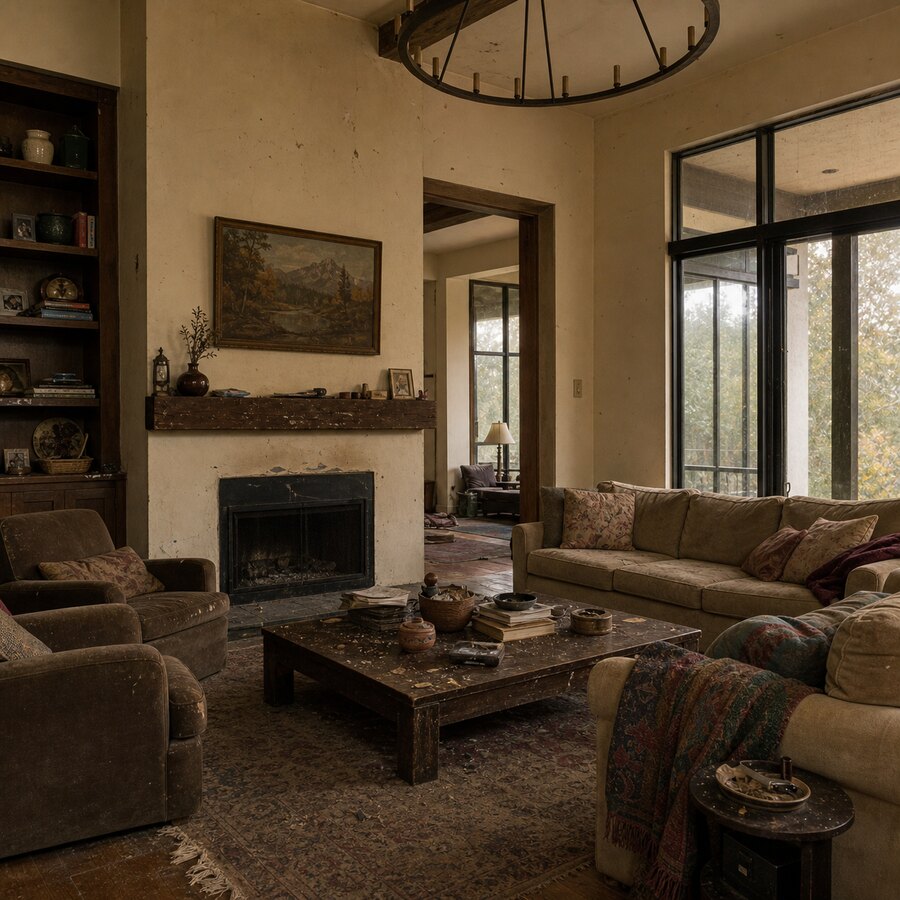
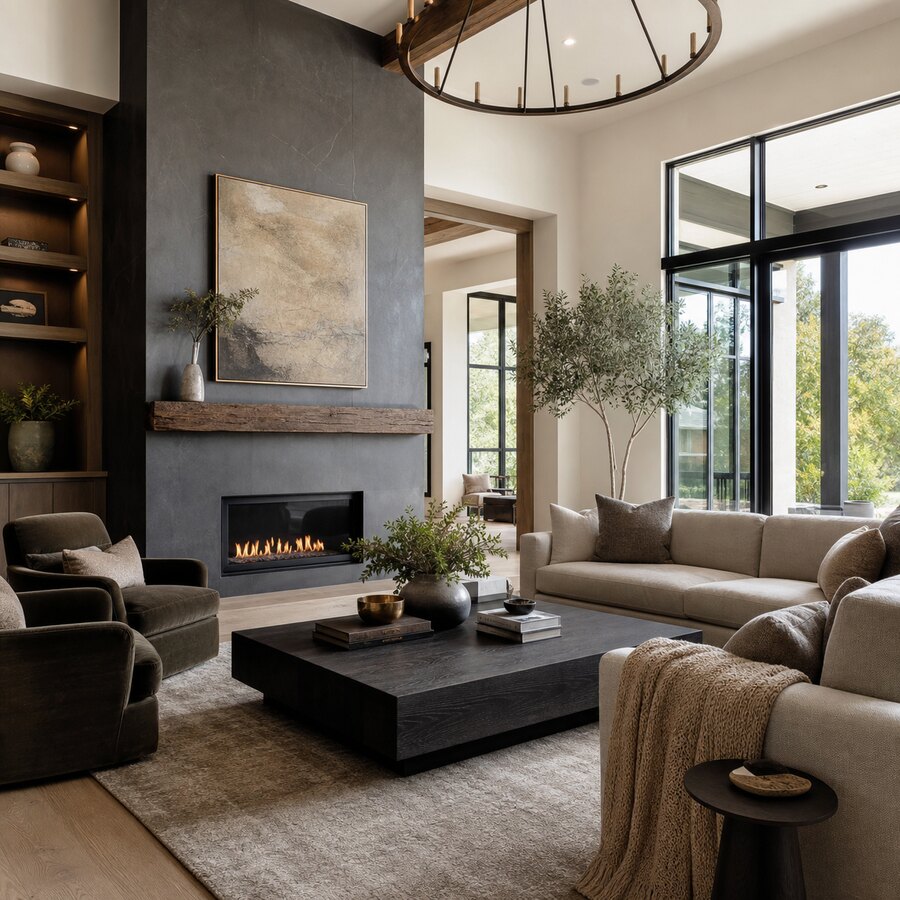
The exact AI image should not be treated as a shopping list. It may show furniture that does not exist, lighting that would not comply with your ceiling height, or joinery that would cost far more than expected. The image is a starting point, not a finished specification.
What an interior designer is still better at
A good interior designer is not just someone who chooses cushions and paint colours. For serious renovations, designers translate taste into decisions that work in a real property: scale, ergonomics, lighting layers, materials, supplier quality, trade sequencing, and how the whole home feels together.
This matters in UK homes because the awkward details are often the project. Period homes may have uneven walls, chimney breasts, alcoves, low ceilings, damp, draughts, old electrics, or unusual room proportions. New-builds may need warmth, storage, better lighting, and personality without ripping everything out. Flats may have leasehold restrictions and access limits for contractors.
Use a designer before high-cost decisions
If you are about to spend thousands of pounds on fitted wardrobes, a kitchen, bathroom tiles, flooring, lighting, curtains, or bespoke joinery, it is worth getting professional input. The design fee can be small compared with the cost of a mistake.
AI might make a small room look elegant with a huge sofa and oversized artwork. A designer will ask whether the door still opens, whether the radiator is blocked, whether there is space to walk around the coffee table, and whether the room works when real people use it every day.
Use a designer when trades are involved
Once a project involves electricians, plumbers, decorators, builders, flooring installers, or kitchen fitters, vague inspiration is not enough. Trades need dimensions, product choices, sequencing, and decisions that do not contradict one another. A designer can help create that joined-up plan.
AI cannot visit your home, inspect the condition of walls, check how natural light changes through the day, or coordinate site realities. It can produce a convincing image, but it cannot take responsibility for what happens when that image meets pipework, sockets, skirting boards, budgets, or lead times.
AI vs interior designer UK: what should you use first?
For most early-stage homeowners, use AI first. It is quick, low-cost, and useful for turning uncertainty into a direction before you speak to professionals, request quotes, or visit showrooms.
Then use an interior designer when the project moves from “what could this become?” to “what exactly are we buying, changing, and asking trades to build?” This keeps AI focused on inspiration and communication, while the designer protects your budget through judgement, feasibility, specification, and implementation.
A practical renovation planning sequence
If you are at the start of a renovation, photograph the room honestly, generate several AI directions, then choose the repeated preferences rather than the fantasy details. Set a rough budget band, such as a £500 styling refresh, a £2,000 to £5,000 room update, or a larger renovation. Bring in a designer when you need feasibility, specifications, lighting plans, joinery decisions, or purchase confidence.
Where AI can mislead homeowners
AI images can look persuasive because they borrow the visual language of high-end interiors: perfect daylight, hidden clutter, oversized rooms, seamless finishes, and furniture that fits exactly. Real homes are less forgiving.
Watch for these common issues:
- Furniture shown at a scale that would not fit the actual room.
- Windows, sockets, radiators, doors, or fireplaces disappearing between images.
- Storage that looks beautiful but does not hold real belongings.
- Lighting schemes without enough task lighting for reading, cooking, or working.
- Finishes that look affordable in an image but require costly bespoke work.
- Open shelving, pale fabrics, or delicate materials that do not suit children, pets, rentals, or heavy use.
If you want to see what AI can and cannot do in practice, the post Is AI Interior Design Actually Any Good? A Real Room Test is a useful companion read. For a more specific room example, see I Let AI Redesign My Small UK Living Room.
When to call an interior designer first
There are times when a designer should come before AI, or at least very early. If your project involves structural changes, a full kitchen, bathroom renovation, bespoke joinery, listed-building considerations, accessibility needs, or a strict deadline, professional guidance should not wait.
The same is true if you struggle with decisions. AI can generate more options than you need, which can make indecision worse. A designer can narrow the field, explain trade-offs, and help you commit.
The balanced answer
AI is best used as an early planning and inspiration tool. Interior designers are best used for judgement, feasibility, specification, and delivery. The two are not direct replacements for each other.
For a typical UK homeowner, the sensible approach is to use AI first to understand what you like, then use a designer where mistakes become expensive. That gives you speed at the start and expertise when it matters.
FAQ
Is AI interior design cheaper than hiring an interior designer?
Yes, AI is usually much cheaper for early inspiration, but it is not a like-for-like replacement. It can help you explore ideas, while a designer helps make decisions work in your actual room and budget.
Can AI replace an interior designer for a UK renovation?
For low-risk cosmetic changes, AI may be enough. For kitchens, bathrooms, lighting plans, fitted furniture, structural work, or expensive purchases, a designer or relevant professional is still the safer choice.
What should I prepare before using AI for a room redesign?
Take clear photos from several corners, note your rough budget, list anything that must stay, and decide what problem you want to solve: more storage, better light, a calmer style, improved layout, or a full refresh.
Should I show AI images to an interior designer?
Yes. AI images can be a useful visual brief if you treat them as inspiration rather than instructions. A designer can identify what is feasible, what needs changing, and what may cost more than expected.
What is the biggest risk of using AI first?
The biggest risk is believing a polished image is a finished plan. AI can hide practical constraints such as room size, sockets, radiators, lighting, storage needs, and the real cost of materials or bespoke work.