
Short answer: AI interior design is good when you need fast visual ideas, layout options and the confidence to compare styles before spending money. It is not good enough to replace human judgement on measurements, lighting, trades, safety, budget or the emotional feel of a real home.
For this test, we treated a typical UK living room as a real project: an awkward rectangle, one large window, existing flooring, a TV wall, family storage needs and a sensible budget. The result was useful, but not magic.
Key takeaways
- AI is strong at style direction, colour palettes and showing several routes quickly.
- It often misses practical constraints such as socket positions, radiator clearance, door swings and actual product sizes.
- The best use is early-stage exploration before you buy furniture, book trades or commit to paint.
- Human judgement still matters for comfort, proportions, lighting, building work and budget decisions.
- If you ask “is AI interior design good?” the honest answer is yes for inspiration, no for final technical decisions.
The room we tested
The test room was deliberately ordinary. Not a showroom, not a mansion, not an impossible Pinterest space. Think of a UK living room in a terrace or semi-detached house: a sofa already owned, a television that has to stay, pale walls, medium-toned flooring and a window that limits where taller storage can go.
That matters because AI design tools often look most impressive when the room is already beautiful. We wanted to know whether they help with the kind of room people actually live in: toys, cables, inherited furniture, a budget that has limits and a layout that needs to work on a wet Tuesday evening as well as in a nice render.
We used the room photo to generate a refreshed interior concept, then judged the output against five practical questions: does it look better, does it respect the room, could someone buy the items, would it work day to day, and what would a human still need to check?
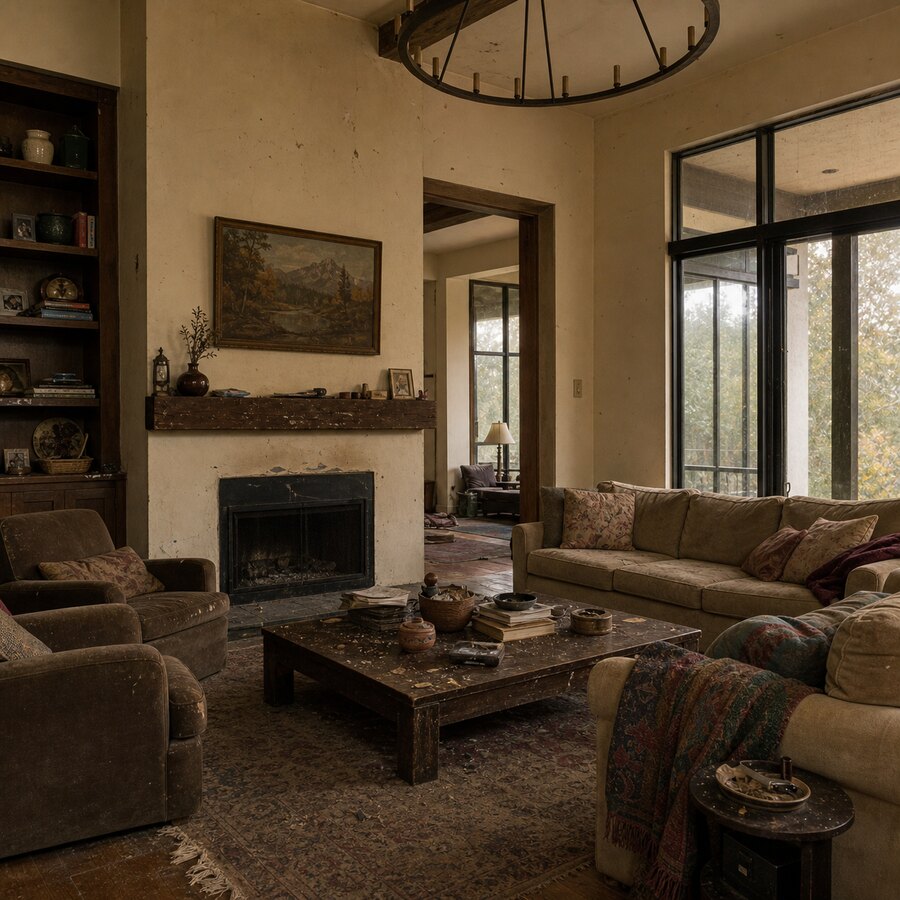
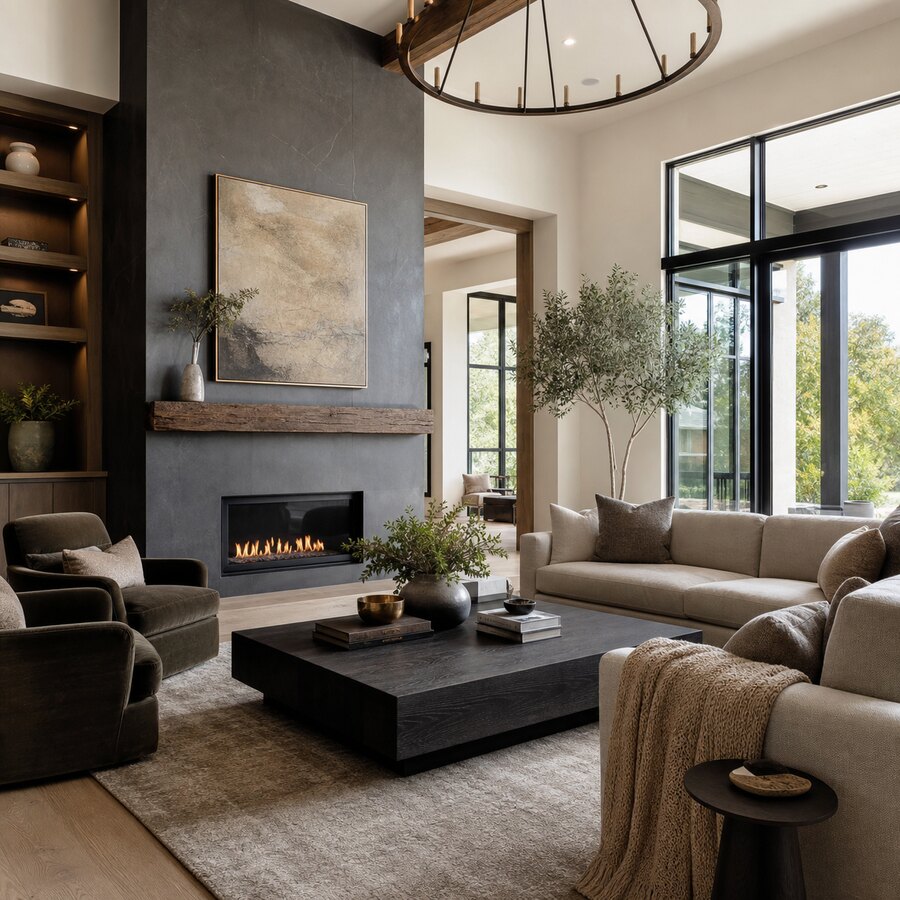
You can see more room transformations on our before and after examples, or try the AI studio with your own space.
What AI interior design got right
1. It made the room feel more coherent
The strongest result was visual unity. The AI quickly picked a tighter palette, reduced the feeling of clutter and created a more intentional relationship between the sofa, rug, wall art and storage. This is where AI is genuinely useful: it can turn a room from “bits I have collected over time” into a recognisable direction.
In our test, the better outputs used warm neutrals, layered lighting and a larger rug to anchor the seating area. That is not revolutionary design advice, but seeing it applied to the actual room made it easier to understand than reading a generic list of tips.
2. It gave several routes without a design consultation
A human designer can offer nuanced alternatives, but that usually takes a brief, a fee and some time. AI is excellent for the first ten minutes of exploration. We could compare a calm Scandinavian look, a darker modern scheme and a softer traditional version without moving a single chair.
This is useful if you and a partner disagree on style. Instead of arguing over abstract words like “cosy” or “modern”, you can compare visual options. Even when the AI version is not perfect, it helps people say, “more like this” or “definitely not that”.
3. It challenged small-room assumptions
Many UK living rooms are arranged around habits rather than the room itself. The AI suggested larger-scale pieces in some versions, including a bigger rug and stronger wall art. That was helpful because small rooms are often made worse by too many small items.
The best AI output showed that the room could take more visual weight than expected. That does not mean every suggestion should be bought, but it can loosen the fear that everything in a modest room must also be modest.
What AI interior design got wrong
1. It guessed measurements
This is the big limitation. AI can make a room look plausible while quietly inventing dimensions. A media unit may appear to fit perfectly, but the real wall might be 20 cm too short. A coffee table might look elegant in the image but leave no walking space once you measure it.
For any real purchase, measure the room, the furniture and the clearance around doors, radiators and walkways. AI can suggest a layout, but it should not be treated as a measured plan.
2. It ignored some fixed constraints
In one version, the design placed furniture too close to a radiator. Another made the TV wall look cleaner by hiding cables and sockets that still exist in real life. This is common. AI tends to optimise for the image, while real homes have plugs, pipes, vents, skirting boards, uneven walls and heating needs.
A human eye asks boring but important questions. Can the curtains open? Can the door swing fully? Is the lamp near a socket? Will the radiator still heat the room? These checks decide whether the design is usable.
3. It made shopping look easier than it is
AI often creates furniture that looks like something you could buy, without matching a real product. The sofa might be a blend of three brands. The sideboard might have impossible proportions. The pendant light might look beautiful but cost far more than the room budget.
That does not make the image useless. It means the AI output should become a shopping brief, not a shopping list. Use it to define shape, colour, material and mood, then find real products available in the UK at the right price.
Where human judgement still wins
Human judgement is not just about taste. It is about trade-offs. In our test, the AI made the room more attractive, but it did not know whether the family needed toy storage, whether the sofa was comfortable, whether the room was north-facing or whether the budget was closer to £300 or £3,000.
A good designer, decorator or careful homeowner will notice the difference between a picture that looks finished and a room that feels right. Texture, acoustics, glare from the television, evening lighting, pet hair, children, cleaning and delivery access all affect whether a design survives real life.
AI also struggles with restraint. It may add too many decorative layers because the image looks more complete that way. In a real room, negative space can be valuable. Not every wall needs art, not every corner needs a plant and not every trend needs to be included.
When AI interior design is genuinely useful
AI is most useful at the beginning of a project. If you are about to redecorate a sitting room, bedroom, kitchen corner or rental property, it can help you test direction before spending money. That is especially helpful when you want a quick visual answer to a question such as: should the room go lighter, darker, warmer, more minimal or more traditional?
It is also useful for confidence. Many homeowners delay decorating because they cannot picture the outcome. A visual concept, even an imperfect one, can reduce that uncertainty. It lets you make smaller decisions faster: paint family, rug size, storage style, wood tone, metal finish and whether a feature wall is worth it.
For a practical workflow, upload a clear daylight photo, generate two or three styles, pick the strongest direction, then sanity-check it against measurements and budget. If the result looks promising, try the AI studio and use the output as a starting point rather than a final specification.
When you should not rely on AI
Do not rely on AI for structural work, electrical decisions, plumbing, fire safety, listed buildings, rental compliance or anything that needs a qualified trade. It should not decide whether a wall can be removed, whether a socket can move, or whether a light fitting is suitable.
You should also be cautious with expensive purchases. A £40 cushion mistake is annoying. A £1,600 sofa that blocks a doorway is a serious problem. Before ordering large items, mark the dimensions on the floor with tape and check how the room feels in use.
For more practical planning, our guides on living-room planning guides and how to plan a room makeover are good next reads.
So, is AI interior design good?
Yes, AI interior design is good if you treat it as a fast visual thinking tool. It is impressive at mood, style and broad layout ideas. It can help you make better early decisions and avoid wasting money on a look you do not actually like.
But it is not a substitute for measuring, budgeting, product sourcing or human judgement. The best result comes from combining both: let AI create options, then let a person decide what is practical, affordable and right for the way the room is lived in.
That makes AI less like an interior designer and more like a very fast sketchbook. Used that way, it is genuinely helpful.
FAQ
Is AI interior design good enough to use for a real room?
Yes, for early ideas and visual direction. It is not enough on its own for measurements, product selection, trade work or final installation decisions.
Can AI interior design replace an interior designer?
No. AI can create quick concepts, but a designer brings judgement, sourcing knowledge, technical checks, budget control and a better understanding of how people live in a space.
What photos work best for AI room design?
Use a clear, wide photo taken in daylight from a corner or doorway. Keep the camera level, include the floor and ceiling where possible, and avoid heavy filters.
Will AI interior design show real furniture I can buy?
Not always. Many AI images show furniture that looks realistic but is not tied to a real product. Treat the image as style guidance, then find real UK products that match the shape, material and budget.
Is AI interior design worth paying for?
It can be worth paying a modest amount if it helps you avoid a bad purchase or choose a clearer direction. It is less useful if you expect a complete technical design package.