
A UK box room can become a comfortable home office if you treat it as a compact work zone rather than a spare bedroom with a desk squeezed in. The best home office makeover ideas UK box room owners can use are built around a narrow desk, vertical storage, layered lighting, cable control and pale, warm finishes that make the room feel bigger without becoming bland.
Start by measuring the awkward parts of the room, especially the door swing, radiator, sockets, window position and any sloped ceiling or bulkhead. Once those constraints are clear, you can choose furniture and storage that earn their space every day.
Key Takeaways
- Measure the usable wall space before buying a desk; many UK box rooms work best with a 90-120 cm wide desk or a wall-mounted surface.
- Use vertical storage, shallow shelving and peg rails instead of bulky bookcases.
- Place the desk to benefit from daylight without putting glare directly on your screen.
- Choose a chair that fits under the desk and supports proper working posture, even in a small room.
- Keep the design calm but practical: good lighting, hidden cables and a small amount of texture matter more than decorative clutter.
Why UK Box Rooms Are Tricky To Turn Into Offices
Box rooms in UK homes often have just enough floor area to look useful on a floorplan, but not enough to accept normal furniture without compromise. They may contain a boiler cupboard, a radiator below the window, a chimney breast, a stair bulkhead or a door that swings across the most obvious desk wall.
That is why a successful makeover starts with constraints, not style. A beautiful desk is a poor choice if the chair cannot pull back. A tall storage unit is frustrating if it blocks light. A large monitor can make the room feel professional, but only if there is enough viewing distance to avoid neck and eye strain.
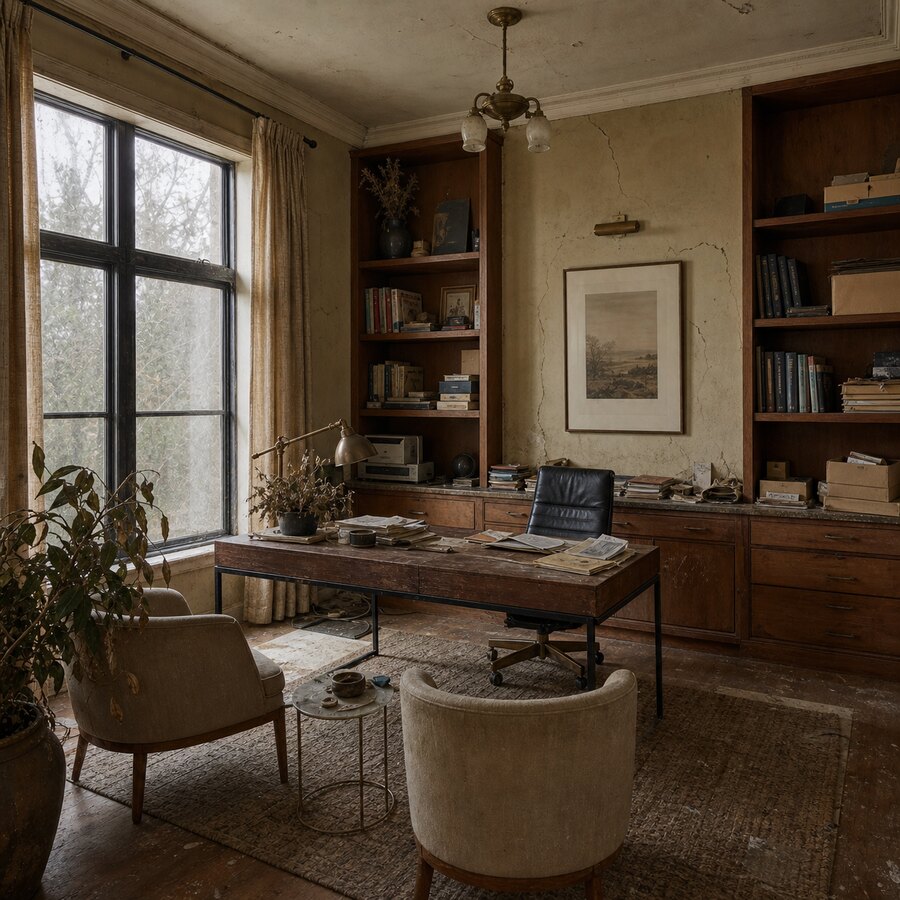
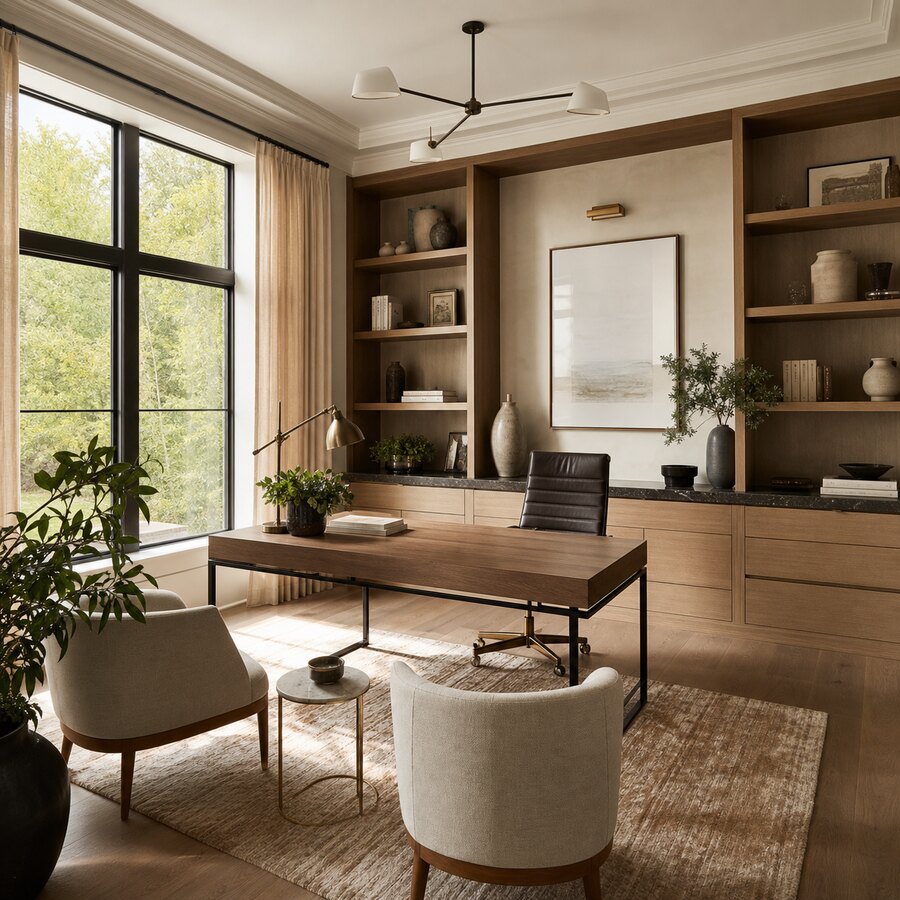
Step 1: Measure The Room Like A Workspace
Before choosing paint or furniture, make a simple sketch of the room. Include the width of each wall, the exact position of the window, radiator, sockets, light switch, door swing and any awkward boxing-in. Then mark the minimum clearance needed for the chair.
As a rule of thumb, allow around 75 cm from the front of the desk to the wall or furniture behind you if possible. If the room is extremely tight, a shallower desk and a chair without arms can make the layout much easier.
Useful Desk Dimensions For A Box Room
A standard office desk can be 120-140 cm wide and 60-70 cm deep, which may overwhelm a small spare room. For many UK box rooms, a desk around 90-120 cm wide and 45-55 cm deep is more realistic. If you use a laptop, a shallow desk may be fine. If you use a monitor, test the viewing distance before committing.
Wall-mounted desks, floating worktops and fitted alcove desks are often worth considering because they avoid chunky legs and make the floor feel clearer.
Step 2: Choose The Best Desk Position
The ideal desk position depends on light, sockets and comfort. Sitting directly with your back to the door can feel cramped, but facing the window can cause glare. A side-on position to the window is often the most comfortable because it gives daylight without reflecting straight into the screen.
If the radiator sits below the window, avoid blocking it completely with a deep desk. Heat needs to circulate, so choose a raised or open-legged desk if the only sensible position is near the radiator.
Also think about video calls. A plain wall, open shelf or tidy pinboard behind you will look calmer than an open wardrobe or a pile of storage boxes.
Step 3: Use Vertical Storage Without Making The Room Feel Packed
Storage is where small home offices often go wrong. A deep bookcase can eat the room. Instead, use shallow shelves, wall-mounted cubes, rails, pegboards and small filing boxes that fit under or above the desk.
Keep the lower part of the room visually light. Put occasional-use items higher up and everyday items within arm’s reach. If you need a printer, place it on a low shelf or in a cupboard rather than on the desk.
Storage Ideas That Work In UK Box Rooms
- Shallow shelves above the desk for notebooks, small plants and reference books.
- A peg rail for headphones, charging cables, scissors and small baskets.
- A slim drawer unit under one side of the desk, leaving room for your knees.
- Stackable document boxes on a high shelf for paperwork you rarely need.
- A wall-mounted cabinet if you need closed storage but cannot spare floor space.
For more small-room inspiration, our real-world post on a small UK living room redesign shows how much difference layout and proportion can make before any major renovation work begins.
Step 4: Get The Lighting Right
A ceiling pendant on its own rarely gives enough light for focused work. A good box room office needs layers: natural light in the day, a task light on the desk and soft background light for darker afternoons.
Choose a desk lamp with an adjustable head so you can aim the light without shining it into your eyes. If the room feels flat, add a small wall light or LED strip under a shelf.
Step 5: Make It Feel Bigger With Colour And Materials
Small does not have to mean plain white. Pale, warm neutrals, soft greens, muted blues and gentle off-whites all work well in box rooms because they bounce light while still feeling lived-in. Painting shelves or a desk the same colour as the wall can reduce visual clutter.
If you want a stronger colour, use it on one controlled surface: the wall behind the desk, a pinboard, a painted shelf or the inside of a cupboard. Texture helps too: a cork board, linen blind, timber desktop or wool rug can warm the room without taking up much space.
Step 6: Plan Cables And Sockets Early
Cables can make even a newly decorated room feel unfinished. Check where the sockets are before fixing the desk position. If you need an extension lead, mount it neatly under the desk rather than leaving it on the floor. Use adhesive cable clips, a cable tray or a simple trunking strip painted to match the wall.
If you are paying for electrical work, ask a qualified electrician about adding sockets at desk height or installing extra outlets with USB-C charging. It can make the room much easier to use.
Step 7: Choose A Chair That Fits The Room And Your Body
The chair is not the place to save every inch. If you work from home regularly, look for a compact ergonomic chair with adjustable height, proper back support and arms that either fit under the desk or can be removed.
Step 8: Add One Flexible Feature
A small office becomes more useful when one element can change by task. That might be a fold-down extra surface, a cork board that swaps between planning and display, a shelf that works as a standing call spot, or a slim sofa bed if the room must occasionally host guests.
Do not make every item flexible. Keep the main desk permanently ready, then add one flexible feature for the secondary use.
A Practical Box Room Office Layout
For a typical UK box room, a strong layout might look like this: a 100 cm wide desk placed side-on to the window, a compact chair tucked fully under the desk, two shallow shelves above, a peg rail beside the desk, a small drawer unit below one side, and a plain wall behind the chair for video calls. Add a task lamp, hidden cable tray and a soft blind to control glare.
This layout leaves the floor readable, keeps storage off the working surface and avoids turning the smallest room into a miniature stockroom.
Budget: What Should You Spend?
A simple box room office makeover can be done for a few hundred pounds if you already have a chair and only need paint, shelves, lighting and a desk. A more polished version with a good ergonomic chair, fitted worktop, extra sockets and better storage may cost £700-£1,500 or more depending on the level of joinery and electrical work.
Spend first on the parts you touch every day: chair, desk height, lighting and cable control. Decorative pieces can come later.
Try The Layout Before You Buy
Because box rooms are unforgiving, it is worth testing ideas visually before ordering furniture. Tape the desk footprint on the floor, mock up shelf heights with painter’s tape, or use an AI room design tool to compare layouts and finishes.
If you want a quick visual starting point, you can try the AI studio and upload a photo of your room. Use it to explore desk placement, storage styles and colour options before spending money.
For a balanced view of what AI can and cannot do with real interiors, see our test: Is AI interior design actually any good?
FAQ
What is the best desk for a UK box room office?
The best desk is usually a shallow 90-120 cm wide desk, a wall-mounted desk or a fitted worktop cut to the exact width of the room. Avoid oversized desks unless you have enough space to pull the chair back comfortably.
How do I make a small home office feel less cramped?
Keep the floor as clear as possible, use vertical storage, choose pale or muted wall colours, hide cables and avoid deep furniture. A side-on desk position near the window often helps the room feel brighter without causing screen glare.
Can a box room office still have storage?
Yes, but the storage should be shallow and mostly wall-mounted. Shelves, peg rails, high cupboards and small drawer units usually work better than deep bookcases or freestanding cabinets.
Where should I put the desk in a box room?
A side-on position to the window is often best because it gives natural light while reducing glare. Also consider the door swing, sockets, radiator and what will appear behind you on video calls.
How much does a box room home office makeover cost in the UK?
A simple makeover can start from a few hundred pounds for paint, shelves, lighting and a desk. If you add a quality ergonomic chair, fitted joinery or new sockets, a realistic budget may be £700-£1,500 or more.