
Short answer: the best way to renovate a small kitchen on a budget in the UK is to plan the layout, sightlines, storage and finishes before you buy cabinets, tiles or paint. Keep the existing plumbing where possible, reuse good carcasses, choose a limited materials palette, and spend first on the changes that improve daily use.
If you are searching for how to renovate a small kitchen on a budget UK, start with a measured plan and a visual mock-up. A clear plan prevents the expensive mistakes that usually happen in compact kitchens: doors that clash, appliances that block walkways, tiles that look too busy, or storage that looks good but does not hold enough.
Key takeaways
- Measure the room, existing services, windows, doors and awkward corners before looking at kitchen ranges.
- Keep plumbing and major electrical points in place unless moving them solves a serious layout problem.
- Refresh sound cabinets with new doors, handles, worktops or paint before paying for a full replacement.
- Use visual planning to compare colours, splashbacks and flooring before buying materials.
- Budget in stages: essential repairs first, layout improvements second, decorative upgrades last.
Start with the room, not the catalogue
A small kitchen rarely fails because the cabinet colour is wrong. It fails because the fridge door blocks the cooker, the bin has nowhere to live, or the worktop is interrupted exactly where you need prep space. Before choosing finishes, make a practical room audit.
Measure the full width and depth of the kitchen, then mark the window, door swing, radiator, boiler, sockets, water supply, waste pipe and extractor position. Note the ceiling height and any boxed-in pipework. In UK flats and terraces, the hidden constraint is often not the cabinet size but the position of the waste pipe or an awkward external wall.
Take photos from all four corners in daylight. They are useful for comparing ideas, sharing with tradespeople and testing visual changes. If you want to test looks before buying samples, you can try the AI studio and compare cabinet colours, wall finishes and flooring from your own kitchen photo.
Set a realistic UK budget range
Costs vary by region, building condition and how much work you do yourself. A light cosmetic update may sit around £500 to £2,000 if you paint, change handles, add shelves and replace tired lighting. A refresh with new doors, laminate worktops, taps and splashback can land around £2,000 to £6,000. A full replacement with fitting, electrics, plumbing and flooring can move beyond £7,000, even in a compact room.
The budget question is not just “what can I afford?” It is “which jobs change how the kitchen works?” Fix damp, unsafe electrics, poor ventilation and broken plumbing first. Then improve storage and worktop space. Decorative upgrades should come after the room is reliable and easy to use.
Plan the layout before buying cabinets
In a small kitchen, the cheapest layout is usually the one that keeps services in place. Moving a sink, gas hob or extractor can add labour, parts and certification costs. Use the planning stage to decide where a change is genuinely worth it.
Check the working triangle, but do not obsess over it
The classic sink, hob and fridge triangle is a useful test, but narrow UK kitchens often work better as a practical line. Aim for a landing zone beside the hob, prep space near the sink and a fridge door that opens without trapping someone in the doorway.
Protect clearances and door swings
Measure appliance doors when open, not just closed. A dishwasher, oven or fridge can block the whole room if it opens into a narrow walkway. Where space is tight, consider under-counter appliances, sliding internal doors or narrower units.
Use vertical storage carefully
Tall cupboards can transform a small room, but too many wall units can make the kitchen feel boxed in. Use closed storage for everyday clutter, one open shelf for items you genuinely use, and a slim rail for tools that would otherwise fill a drawer.
Keep what is structurally sound
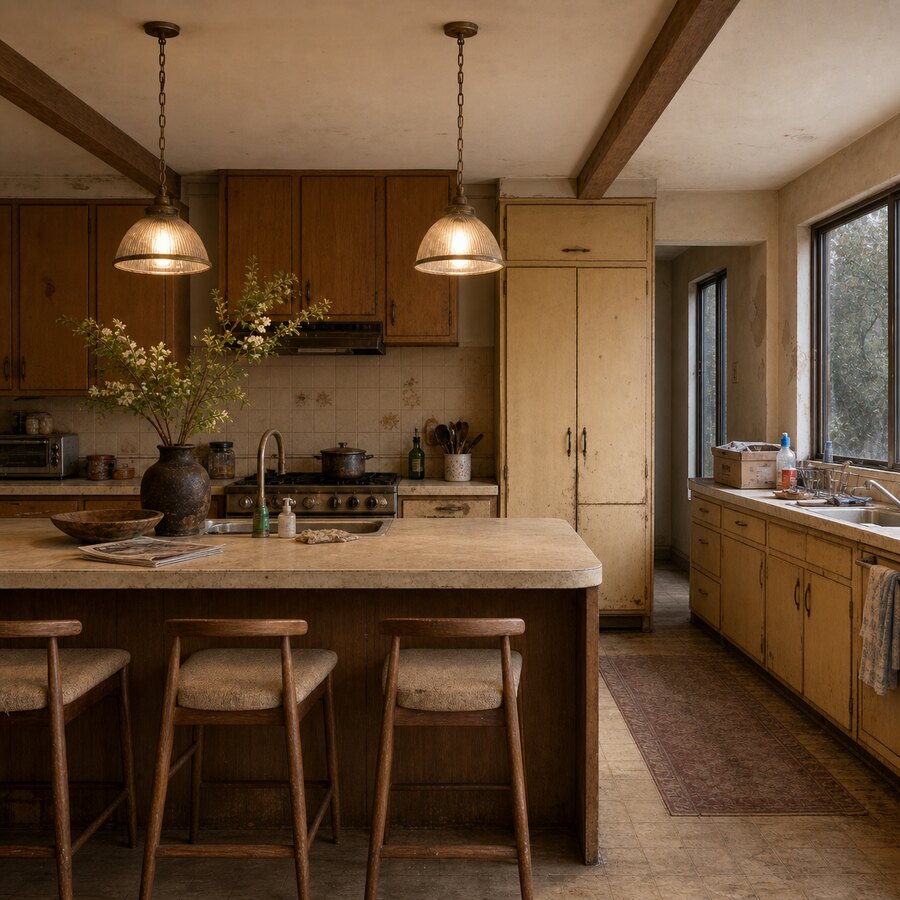
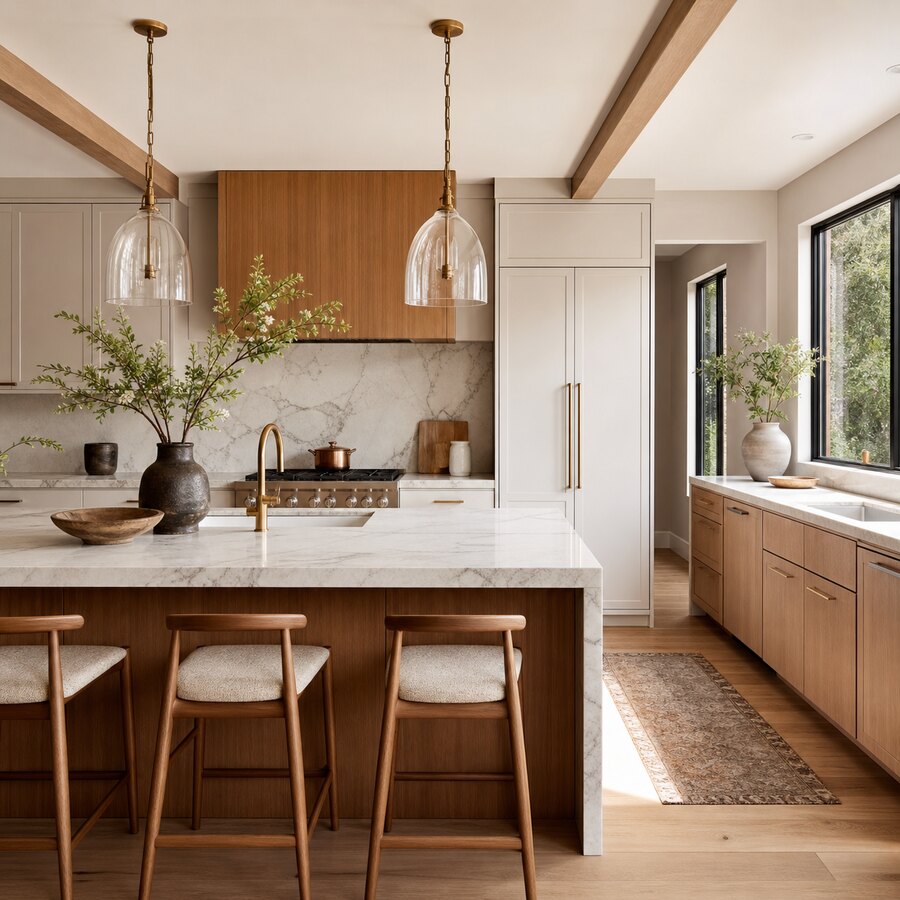
The cheapest sustainable renovation is often not a full rip-out. If the cabinet carcasses are level, dry and sturdy, you may be able to replace only doors, drawer fronts, handles, hinges and end panels. This can refresh the room at a fraction of the cost of new units and reduces disruption.
Worktops are another high-impact upgrade. Laminate has improved significantly and can look sharp when the edge detail is neat. Solid wood needs maintenance around sinks, while quartz and stone are usually harder to justify on a tight budget.
Before painting existing cabinets, clean and degrease thoroughly, sand lightly, use the right primer, and allow proper curing time. Rushing this stage leads to chipped doors within weeks, especially near handles and the sink.
Use visual planning before choosing finishes
Small kitchens amplify every finish decision. A tile that looks subtle in a showroom can dominate a two-metre splashback. Visual planning is a budget tool because it helps you reject weak ideas before you pay for them.
Start by choosing one main cabinet colour, one worktop tone and one floor direction. Then test wall colour and splashback options against those fixed choices. If you change everything at once, it becomes harder to see which decision is helping and which is making the room feel busy.
For a compact UK kitchen, safe low-cost combinations include warm white cabinets with a pale laminate worktop, sage lower units with simple white walls, or light oak-style worktops with matte neutral doors. One clear texture is usually enough.
Spend on lighting and ventilation
Lighting can make a modest kitchen feel more finished than expensive cabinets under a dull ceiling bulb. Use a bright general light, then add under-cabinet task lighting if you have wall units.
Ventilation matters because steam and cooking smells have less space to disperse. If the extractor is weak or recirculating with an old filter, improve it before adding decorative paint or open shelves.
Choose budget upgrades with the biggest visible return
Not every low-cost upgrade is equal. Handles, taps, lighting and splashbacks are small details that people notice because they sit at eye or hand level. Painting walls is cheap, but it will not fix a poor layout or a lack of storage.
If the room is structurally sound, a sensible order is: declutter and repair, improve lighting, repaint walls, replace handles, refresh cabinet fronts, then address worktop and splashback. This lets you stop after each stage if the kitchen already feels good enough.
When comparing design options, look beyond the first pretty image. Remodelers UK has a simple feature overview and pricing information if you are weighing up visual planning against buying physical samples and returning unsuitable materials.
A simple step-by-step budget plan
1. Clear and photograph the kitchen
Remove small appliances, magnets, cleaning bottles and loose items before taking photos. This makes it easier to judge the room itself rather than the clutter. Keep a second set of photos with the usual items in place so you do not forget how much storage you actually need.
2. Measure and list fixed constraints
Record the sink position, cooker supply, extractor route, sockets, stop tap, boiler and any walls that cannot be altered. These fixed points shape the realistic renovation plan. Share them with fitters before asking for quotes.
3. Decide what can stay
Check carcasses, hinges, drawer runners, plinths, worktops and wall tiles. If something is solid but ugly, it may be a candidate for refreshing. If it is swollen, unsafe, loose or mould-damaged, replacement is usually wiser.
4. Test two or three visual routes
Create a light option, a warmer option and a slightly bolder option. Compare them on the same photo so your decision is based on your actual kitchen, not a showroom with different light and proportions.
5. Get quotes with a defined scope
Ask tradespeople to price the same list of works. A vague “small kitchen renovation” quote is hard to compare. A defined scope might say: keep plumbing in place, replace doors and handles, fit new laminate worktop, tile the splashback, add lighting and repaint walls.
Common budget mistakes to avoid
The first mistake is buying cabinets before resolving the layout. The second is choosing tiles, paint and flooring separately, then discovering they clash in the room. The third is underestimating labour. UK trade costs can exceed the price of materials.
Also avoid copying a large kitchen trend into a small room without adjusting scale. Compact kitchens reward discipline: fewer finishes, cleaner lines and storage that hides daily clutter.
Final advice
A budget small kitchen renovation works best when the design is planned visually, costed in stages and kept honest about the room’s limits. Spend money where it improves use every day, then choose finishes that make the space brighter, calmer and easier to maintain. Before you buy cabinets, tiles or paint, test the look from your own photo and make sure the plan solves the real problems in the room.
For a soft first step, try the AI studio with a clear photo of your kitchen and compare a few practical budget routes before committing to materials.
FAQ
What is the cheapest way to renovate a small kitchen in the UK?
The cheapest route is usually to keep the existing layout, repair what is failing, and refresh sound cabinets with new handles, paint, doors or worktops. Avoid moving plumbing or electrics unless the current layout causes a real daily problem.
Can I renovate a small kitchen for under £2,000?
Yes, but it will usually be a refresh rather than a full replacement. A budget under £2,000 can cover paint, lighting, handles, shelves, small repairs and possibly a modest worktop or door-front update if you shop carefully and do some work yourself.
Should I replace cabinets or just change the doors?
If the cabinet carcasses are dry, level and sturdy, changing doors and handles can be a good budget choice. Replace the units if they are swollen, unstable, badly fitted, mould-damaged or cannot support the storage and worktop you need.
What colours make a small kitchen look bigger?
Light neutrals, warm whites, pale greys, soft greens and muted blues can all work. The bigger issue is contrast: too many strong contrasts across cabinets, tiles, floor and worktop can make a compact kitchen feel busier and smaller.
Is visual planning worth it before buying kitchen materials?
Yes. Visual planning helps you compare finishes in your actual room, with your light and layout. It can prevent wasted spending on tiles, paint or cabinet colours that looked good elsewhere but feel wrong in your kitchen.